

Last updated: March 5, 2026
Note: The federal 30% Residential Clean Energy Credit (ITC) expired for homeowner-owned systems installed after December 31, 2025.
What this means for you in 2026: Solar economics now depend on state and local incentives, your utility’s rate structure, net metering policies, and how much electricity you actually use.
Translation: Solar can still make financial sense, but the math is different than it was a year ago.
All figures in this guide use U.S. national averages from publicly available data sources like EnergySage, the U.S. Energy Information Administration (EIA), and the Solar Energy Industries Association (SEIA). Your actual costs and savings will vary based on where you live, your roof condition, and how much electricity you use.
Educational disclaimer: This content is for informational purposes only and doesn’t constitute financial, tax, or installation advice. Talk to qualified professionals about your specific situation.
How Does Home Solar Actually Work?
Before we talk about costs and savings, let’s talk about what solar panels actually do—and what they don’t do.
Solar Doesn’t Replace the Grid (And That’s Okay)
Your home isn’t an island. Even with solar panels, you’re still connected to the electric grid.
Here’s how the U.S. electricity system works: Power plants generate electricity (from natural gas, coal, nuclear, wind, hydro, and solar), which gets transmitted over high-voltage lines, stepped down through substations, and delivered to homes through local distribution networks.
What residential solar does: It supplements grid power by letting you generate some of your own electricity on-site. You’re still connected to the grid, but you’re drawing less from it—especially during the day when your panels are producing.
What it doesn’t do: Completely eliminate your need for the grid. You’ll still pull electricity from the grid at night, on cloudy days, or when your usage exceeds what your panels produce.
Think of solar as a bill-reduction tool, not a total replacement for grid electricity.
Find out what your state is offering — tax credits, rebates, and net metering explained
We’ve verified every program and eligibility requirement so you don’t have to. Pick your state below.
Types of Solar Panels: What You’re Actually Buying
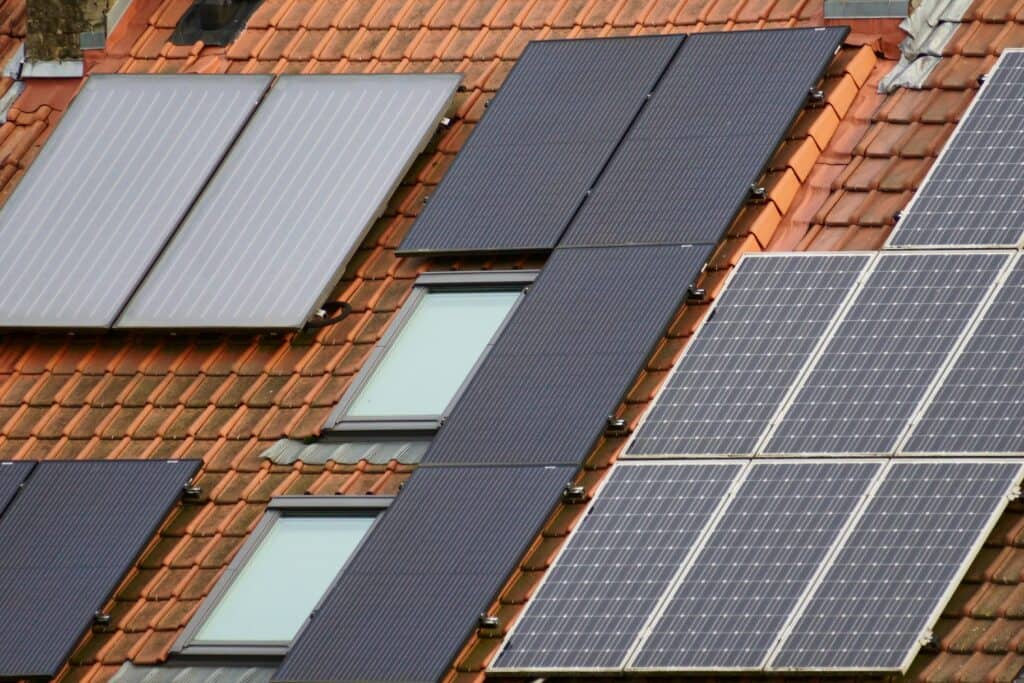
Not all solar panels are created equal. Here’s what you’ll encounter when shopping:
Monocrystalline Panels (Most Common)
- Efficiency: 18–22%
- Best for: Homeowners with limited roof space
- Why people choose them: Higher efficiency means you need fewer panels to hit your production goals. They also perform better in low-light conditions.
Polycrystalline Panels
- Efficiency: 15–18%
- Best for: Homes with plenty of roof space
- Why people choose them: Lower cost per panel, though you’ll need more of them to generate the same amount of electricity.
Thin-Film Panels
- Efficiency: Lower than crystalline panels
- Best for: Specialty applications (lightweight, flexible installations)
- Why they’re rare on rooftops: Less efficient, so not ideal for most residential installs.
Bifacial Panels (Newer Option)
- What makes them different: They capture sunlight from both sides
- Output boost: Can increase production by 10–20% under the right conditions
- Where you’ll see them: Ground-mounted systems or specialty rooftop setups
Beyond panels, your system includes:
- Inverters (converts DC power from panels to AC power your home uses)
- Mounting equipment (designed for local wind and snow loads)
- Monitoring software (lets you track real-time production)
How Your Electricity Usage Affects Solar Savings
Here’s the thing most installers don’t emphasize enough: Your savings depend as much on how you use electricity as on the panels you install.
Utility Rate Structures (And Why They Matter)
Your utility might charge you in one of these ways:
Flat-rate pricing: You pay the same price per kilowatt-hour (kWh) no matter when you use electricity. Solar offsets are straightforward here—every kWh your panels produce saves you the same amount.
Time-of-use (TOU) rates: Electricity costs more during peak hours (usually late afternoon/evening) and less during off-peak hours (midday, overnight). Your solar panels produce the most electricity midday, which may or may not align with when electricity is most expensive. This can complicate savings projections.
Tiered pricing: The more electricity you use, the higher your rate per kWh. Solar can help you stay in lower, cheaper tiers by reducing your total grid consumption.
Your Household Usage Patterns Matter
Two homes with identical solar systems can see very different bill savings because of when they use electricity.
Example 1: High daytime usage
- You work from home, run appliances during the day, and use AC while the sun is shining.
- Result: Your solar panels produce electricity exactly when you’re using it. High direct savings.
Example 2: High evening usage
- You’re at work all day. Most of your electricity use happens after sunset.
- Result: Your panels produce during the day when you’re not home. You export that power to the grid (often at lower credit rates) and pull from the grid in the evening. Lower direct savings.
Factors that influence your usage:
- Household size
- Seasonal heating and cooling demand
- Electric vehicles (charging at home)
- Work-from-home schedules
Bottom line: Solar is not a fixed-return investment. It’s a bill-reduction tool shaped by how and when you use electricity.
Grid Policies: The Hidden Factor in Your Savings
Here’s something most solar sales pitches gloss over: How much you save depends on policies set by your utility and state, not just how much electricity your solar panels system produces.
What Grid Policies Control:
How exported electricity is credited:
- Some utilities credit you at retail rates (what you pay for electricity)
- Others credit you at wholesale rates (much lower)
- This can cut projected savings by 30-50%
Whether credits roll over:
- Some utilities let you bank credits month-to-month or year-to-year
- Others reset your credits annually or don’t allow rollover at all
Fixed grid charges:
- Some utilities charge a monthly “connection fee” that solar doesn’t offset
- These fees can reduce overall savings
Time-based pricing for exports:
- Some utilities pay less for solar electricity exported during midday (when supply is high) and more for evening exports (when demand peaks)
Why this matters: These are policy decisions, not technical limitations of solar panels. They can change over time as more solar gets added to the grid, which is why long-term savings projections should be viewed with caution.
Solar and Power Outages: The Most Common Misconception
Quick reality check: Installing solar panels alone does NOT protect you during power outages.
Why? Most grid-connected solar systems automatically shut down during outages to protect utility workers repairing power lines. This is a safety requirement, not a design flaw.
What if you want backup power? You need a battery storage system (like a Tesla Powerwall, Enphase battery, etc.). Batteries let your home temporarily operate independently during outages by supplying power to critical loads.
Important caveat: Even with batteries, most residential systems are designed for short-term resilience (a few hours to a day or two), not indefinite off-grid living.
Understanding this prevents one of the biggest solar disappointments: Homeowners who install solar thinking they’re protected during blackouts, only to lose power the first time the grid goes down.
The Big Picture: Solar as Part of Your Energy System
Here’s the mindset shift that helps everything click:
Solar is not a standalone solution. It’s a modification to how your home interacts with the electric grid.
What this means:
- Solar reduces your reliance on grid electricity—but doesn’t replace it
- Your savings depend on pricing rules and policies, not just sunlight
- Policy and infrastructure changes can influence outcomes over time
Why this perspective matters: When you understand how solar interacts with the grid, utility pricing, and household usage, you can evaluate whether solar actually aligns with your goals—not just whether it sounds good on paper.
Think of residential solar not as a home improvement project, but as participation in an evolving energy system.
What Affects Solar Performance? (Roof, Climate, and Environment)
Roof Factors
Orientation:
- South-facing roofs get the most sunlight in the U.S.
- East- and west-facing roofs can still work well with adjusted system sizing
- North-facing roofs generally aren’t ideal (in the Northern Hemisphere)
Other roof considerations:
- Roof pitch and angle
- Structural integrity (can it support the weight?)
- Available surface area
- Roof age (most installers recommend at least 10 years of remaining roof life before installing solar)
Shading
Trees, buildings, chimneys, or roof obstructions can reduce output. Modern inverters (especially microinverters) can mitigate some shading losses, but site conditions still matter.
If your roof has significant shading, solar might not be the best fit—or you’ll need a larger system to compensate.
Climate
Myth busting:
- “Solar doesn’t work in cold climates”
- FALSE. Solar panels work efficiently in cold temperatures.
- “Solar doesn’t work on cloudy days”
- FALSE. Panels still produce power, just at reduced output.
- “Snow makes solar useless”
- MOSTLY FALSE. Panels typically shed snow naturally when tilted, and production resumes quickly.
What DOES affect performance:
- Extremely high heat can slightly reduce efficiency (though strong sunlight often offsets this)
- Shorter daylight hours in winter reduce total daily production
Key point: Solar systems are designed using annual performance averages, not daily expectations. Some days you’ll produce a lot, some days less—but over a year, it balances out.
What Does Solar Actually Cost in 2026?
Without the federal tax credit, upfront costs are higher than they were last year.
National Average Installed Costs (Before State/Local Incentives)
Per-watt cost: $2.50–$3.50/watt Typical system size: 7–12 kW Total system cost: $18,000–$40,000+
Source: EnergySage National Marketplace Data; SEIA
Cost Breakdown (What You’re Paying For)
- Panels: 25–35%
- Inverters: 10–15%
- Labor, permits, wiring: 30–40%
- Racking and monitoring equipment: 10–20%
Source: EnergySage; SEIA installer surveys
Translation: Only about a third of what you pay goes toward the actual solar panels. The rest covers installation, electrical work, permits, and equipment.
Where Can I Find Solar Incentives?
Below is a list of all current solar incentives by state. Select yours to see how much you can save:
Alabama
Alaska
Arkansas
Colorado
Connecticut
Delaware
Georgia
Hawaii
Idaho
Indiana
Iowa
Kansas
Kentucky
Louisiana
Maine
Maryland
Michigan
Minnesota
Mississippi
Missouri
Montana
Nebraska
Nevada
New Hampshire
New Jersey
North Dakota
Ohio
Oklahoma
Oregon
Pennsylvania
Rhode Island
South Carolina
South Dakota
Tennessee
Utah
Vermont
Virginia
Washington
West Virginia
Wisconsin
Wyoming
Financing Options: Own vs. Lease vs. PPA
Ownership (Loan or Cash)
How it works: You own the system outright.
Pros:
- Greatest long-term savings potential
- You keep all tax credits and incentives
- Full control over the system
- Easier to sell your home (owned systems transfer cleanly)
Cons:
- Higher upfront cost (unless you finance)
- You’re responsible for maintenance and repairs
Lease
How it works: A solar company installs panels on your roof. You pay them a fixed monthly fee.
Pros:
- Little to no upfront cost
- Company handles maintenance
Cons:
- You don’t own the system (no tax credits for you)
- Limited long-term savings
- Can complicate home resale (buyer must agree to take over the lease)
Power Purchase Agreement (PPA)
How it works: Similar to a lease, but instead of a fixed monthly fee, you pay for the electricity the panels produce (usually at a lower rate than your utility).
Pros:
- No upfront cost
- Company handles maintenance
- You only pay for what you use
Cons:
- You don’t own the system
- Limited long-term savings
- Same resale complications as leases
Bottom line: Ownership provides more long-term value. Leases and PPAs reduce upfront costs but limit flexibility and savings potential.
How Much Can You Actually Save?
Typical annual bill reductions: $1,000–$3,000+ Payback period: 8–12 years on average
But here’s the catch: Savings estimates are not guarantees.
Why savings vary so much:
- Your utility’s rate structure
- Whether your state has net metering (and how it’s structured)
- How much electricity you use
- Whether electricity rates increase over time
- Policy changes to export credits or fixed charges
Real talk: If a solar company promises you’ll save $50,000 over 25 years, ask them to show their assumptions. Those projections often assume:
- Electricity rates increase 3-5% annually (maybe, maybe not)
- Net metering policies don’t change (they can and do)
- Your usage stays constant (unlikely over 25 years)
Treat savings projections as estimates, not guarantees.
Long-Term Performance and Maintenance
Panel Degradation
Solar panels don’t produce the same amount of electricity forever. They gradually lose a small amount of efficiency over time.
Typical degradation: 0.3% to 0.7% per year What this means: After 25 years, most panels operate at 80–90% of their original capacity.
Source: NREL; manufacturer warranties
Is this a problem? Not really. It’s built into system design and savings projections.
Maintenance Requirements
Good news: Solar panels require minimal maintenance.
What you’ll actually need to do:
- Occasional cleaning (rain often handles this naturally)
- Monitor system performance (most systems have apps for this)
- Inverter replacement after 10–15 years (plan for this cost)
Warranty coverage:
- Panels: Typically 25–30 years
- Inverters: Usually 10–15 years
Source: NREL; manufacturer documentation
Insurance
Most homeowners insurance policies treat rooftop solar as part of the home structure. Your existing policy likely covers it, though insurers may require notification or a policy update.
Check with your insurance company before installing.
Owned vs. Leased Systems: What Happens When You Sell Your Home?
Owned Systems
Generally easier to transfer during resale. The system is part of your home, just like the roof or HVAC system.
Selling point: Many buyers see owned solar as an asset (lower electricity bills = attractive). The growing interest in sustainability has led to an increase in demand for homes equipped with renewable energy sources. The positive solar energy impact on home value is becoming more recognized as buyers prioritize energy efficiency and lower long-term costs. As a result, properties with solar installations often command higher prices and sell more quickly in competitive markets.
Leased or PPA Systems
Can complicate home sales. The buyer must:
- Agree to take over the lease/PPA contract
- Qualify for the agreement (credit check, etc.)
Or: You buy out the lease before selling (potentially expensive).
Real estate agents often report: Leased systems can slow down sales or reduce offers.
Why You Should Educate Yourself Before Getting Quotes
Most homeowners start by calling installers and getting quotes. That’s backwards.
Here’s why:
If you don’t understand how solar interacts with your household usage, utility pricing, and long-term ownership, you can’t evaluate whether a quote is good or bad.
Educational research helps you:
- Compare proposals accurately (not just on price)
- Ask better questions (“How does time-of-use pricing affect my savings?”)
- Avoid misleading assumptions (“We’re guaranteeing $40k in savings over 25 years!”)
- Understand long-term implications (What happens if net metering policies change?)
Solar decisions involve:
- Energy systems
- Policy and regulation
- Contracts and financing
- Household economics
It’s not just about panel prices.
The Final Verdict: Should You Go Solar?
Honest answer: It depends.
Solar may be worth exploring if you:
- Have moderate to high electricity usage
- Own a home with a roof that gets good sun exposure
- Plan to stay in your home for at least 8-12 years
- Want to stabilize future energy costs (hedge against rising rates)
- Live in a state with strong net metering policies
Solar might NOT make sense if:
- Your roof has significant shading
- You plan to move in the next 5 years
- Your electricity bills are already low
- Your state has weak or unfavorable solar policies
- You’re not comfortable with the upfront cost (and don’t want to lease)
Solar is not one-size-fits-all.
Understanding how it fits into the broader electricity system—and your specific household situation—leads to better decisions and fewer surprises.
Data Sources
This guide uses data from:
- U.S. Energy Information Administration (EIA)
- National Renewable Energy Laboratory (NREL)
- Solar Energy Industries Association (SEIA)
- State utility commissions
- Utility tariff filings
Data reflects historical averages and modeled estimates. Your results may vary based on location, roof conditions, and usage patterns.
Frequently Asked Questions About Residential Solar
What if I have an HOA or rent?
HOA: Check your agreement first. Many HOAs allow solar, and some states have “solar access laws” that prevent HOAs from blocking installations.
Renting: You’ll need landlord approval. Alternatively, look into community solar programs (you subscribe to a shared solar farm and get credits on your bill).
Do solar panels work on cloudy days or in winter?
Yes. Solar panels still produce electricity on cloudy days, just at reduced output compared to full sunlight.
Cold temperatures don’t reduce performance—in fact, panels often operate more efficiently in cooler conditions. What reduces winter production is shorter daylight hours, not temperature.
How long do solar panels last?
Most modern solar panels last 25–30 years or more.
Manufacturers typically offer performance warranties guaranteeing panels will produce around 80–85% of their original output after 25 years.
Note: Inverters and other components may need replacement sooner (around 10–15 years).
Does installing solar mean I’m off the grid?
No. Most residential solar systems remain connected to the electric grid.
Without battery storage:
- You’ll still rely on grid electricity when solar production is low
- Your home will lose power during outages (safety shutoff requirement)
With battery storage:
- You can power critical loads during outages
- You’re still connected to the grid (but less reliant on it)
True “off-grid” living requires significant battery capacity and is rare in residential settings.
Are solar incentives available nationwide?
Some are federal, others vary by state, utility, or municipality.
Incentive programs can change or expire. Common types include:
- Tax credits (federal and state)
- Rebates (state or utility)
- Performance-based incentives (payments based on production)
- Net metering credits
Check: DSIRE (Database of State Incentives for Renewables & Efficiency) for your area.
Is solar worth it if electricity prices change?
This is the million-dollar question.
If electricity prices rise: Solar offsets higher costs, improving your return on investment.
If pricing structures change (reduced export credits, higher fixed charges): Projected savings may shrink.
Why this matters: Utility policies evolve. What made sense in 2020 might not make sense in 2030.
This is why understanding local utility policies is as important as system cost.
What maintenance do solar panels require?
Residential solar systems require minimal maintenance.
What you’ll actually need to do:
- Occasional cleaning to remove dirt or debris (rain often handles this)
- System monitoring to ensure proper operation (most systems have apps)
What you won’t need to do:
- Regular servicing (no moving parts = less mechanical wear)
- Frequent repairs (panels are durable and low-maintenance)
Plan for: Inverter replacement after 10–15 years (typical lifespan).