

Last updated: April 1, 2026
Changelog
- Federal 30% tax credit confirmed expired December 31, 2025 — removed from active cost calculations
- Maximum system configuration corrected: 4 units + 3 Expansions total (94.5 kWh), not 216 kWh
- Weight updated to 291.2 lbs per official Tesla datasheet
- Battery chemistry clarified as Lithium Iron Phosphate (LFP)
- Noise level updated to Tesla spec: under 50 dB typical at 1 meter
Tesla Powerwall 3: Is It Worth the Hype?
Quick Summary
The Tesla Powerwall 3 is still one of the strongest backup batteries you can buy in 2026. It brings noticeably more continuous power than the previous model, works beautifully if you’re already in the Tesla solar ecosystem, and has proven itself during real outages. That said, it carries a premium price, shines brightest when paired with Tesla gear, and isn’t the most flexible choice if you have a different solar setup or are purely focused on the lowest upfront cost.
How Much Does a Powerwall 3 Actually Cost?
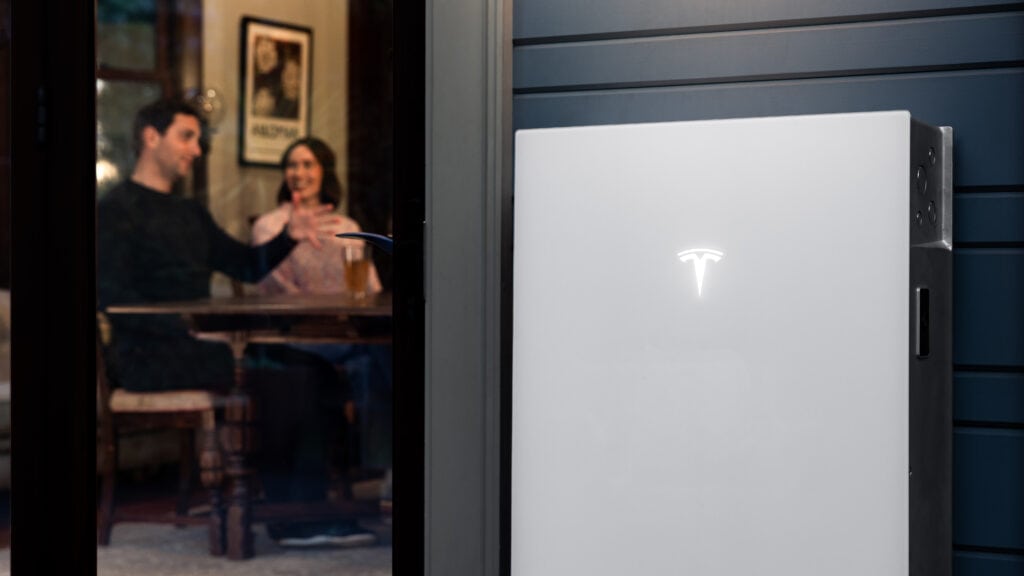
The typical cost of a Powerwall falls between $11,500 and $16,779 before any incentives. But that range can feel vague when you’re trying to budget for an actual installation. So, let’s break down exactly what you’re paying for and where your specific project might land within that range.
Generally speaking, the price you’ll pay depends on a number of factors: your location, whether you’re installing one unit or multiple, what your existing electrical setup looks like, and whether you’re buying through Tesla directly or working with a local certified installer.
Tesla Powerwall 3 Cost Breakdown (2026)
| Component | Cost Range | Notes |
|---|---|---|
| Powerwall 3 Unit (equipment only) | $8,700 – $10,000 | Base battery with integrated solar inverter |
| Control & Metering | ||
| • Tesla Gateway 3 | $900 – $1,165 | Required for partial-home backup or utility restrictions |
| • Tesla Backup Switch | $0 – $300* | For whole-home backup; saves $3,000-$5,000 vs Gateway |
| Installation Labor | $1,500 – $3,500 | Varies by region, complexity, and roof access |
| Electrical Panel Upgrade (if needed) | $1,300 – $4,000 | Required for older 100-150 amp panels |
| Permits & Inspections | $100 – $800 | Depends on local municipality requirements |
| Critical Load Panel (optional) | $1,100 – $3,000 | Only needed with Gateway 3 for partial backup |
| Miscellaneous Materials | $200 – $500 | Conduit, cables, mounting hardware, accessories |
| Total Installed Cost (1 unit) | ||
| • With Backup Switch (whole-home) | $10,800 – $15,300 | Most cost-effective for 200A service homes |
| • With Gateway 3 (partial-home) | $13,800 – $18,500 | Includes subpanel and additional labor |
The biggest variable? Installation labor and electrical work. A straightforward install on a newer home with a 200-amp panel might cost $11,000 – $13,000, while an older home needing panel upgrades and complex wiring could push toward $16,500 or higher.
Federal Tax Credit: What Changed in 2026
Important update: The 30% federal Investment Tax Credit (ITC) for residential battery storage expired on December 31, 2025 and is no longer available for new installations. The figures below are preserved for reference only — they reflect what buyers paid before the credit expired.
If you installed your Powerwall before December 31, 2025 and haven’t yet filed taxes for that year, consult a licensed tax professional about your eligibility. If you’re installing in 2026, do not factor this credit into your budget.
Here’s what the math looked like under the ITC:
| System Configuration | Cost Before Tax Credit | 30% Tax Credit | Your Net Cost |
|---|---|---|---|
| 1 Powerwall 3 (low end) | $11,000 | $3,300 | $7,700 |
| 1 Powerwall 3 (mid-range) | $13,500 | $4,050 | $9,450 |
| 1 Powerwall 3 (high end) | $16,500 | $4,950 | $11,550 |
Multi-Unit Pricing: The More You Buy, The More You Save
Tesla offers discounts when you install multiple Powerwall 3 units at the same time. The per-unit cost drops significantly after the first battery because you’re sharing installation costs and the Gateway/Backup Switch across all units.
Tesla offers substantial multi-unit discounts that significantly reduce the per-battery cost—while a standalone unit runs $11,500, adding a second Powerwall drops the incremental cost to approximately $7,000-$9,000 per unit.
Expansion units provide even better value at roughly $6,000 each (around $444/kWh), adding 13.5 kWh of storage without requiring complete system duplication.
After applying the 30% federal solar tax credit, a single Powerwall costs an effective $10,780, while a two-unit system totals approximately $18,500 post-credit.
Tesla’s “Next Million Powerwall Rebate” offers $500 per unit (maximum $1,000 for 2 units) — but orders must be placed by March 31, 2026. Installation must be completed by September 30, 2026. Rebate is paid as a Virtual Visa Rewards Gift Card. See Tesla’s rebate portal to verify current availability before ordering. (Source: Tesla, March 2026)
For homeowners needing 27+ kWh capacity, installing two Powerwalls costs roughly 65% less than purchasing two separate single-unit systems, making multi-unit configurations the clear value choice for whole-home backup power.
Multi-Unit Cost Comparison
| Number of Units | Total Installed Cost | Cost Per Unit |
|---|---|---|
| 1 Powerwall 3 | $11,500 | $11,500 |
| 2 Powerwall 3 | $18,500 | $9,250 |
| 3 Powerwall 3 | $25,500 | $8,500 |
| 4 Powerwall 3 (maximum) | $32,000 | $8,000 |
Prices reflect typical national averages with standard installation. Your actual costs may vary based on location and site conditions. The 30% federal tax credit expired December 31, 2025 and is not available for 2026 installations.
Installing three Powerwall 3 units at once costs about $5,950 per unit after tax credits, compared to $8,050 for a single unit. That’s a $2,100 savings per battery just by installing them together.
When Does Multiple Units Make Sense?
Most homes can handle their essential loads—fridge, lights, Wi-Fi, some outlets—with a single 13.5 kWh Powerwall 3. But you might need multiple units if you:
- Want true whole-home backup including central AC and electric appliances
- Have a large home (3,000+ square feet)
- Run heavy equipment or have a home workshop
- Charge an electric vehicle from home storage
- Want 2-3 days of backup power without solar recharging
MORE TESLA


Key Specs
The Powerwall 3 is Tesla’s current flagship home battery, built for whole-home backup, maximizing solar self-consumption, and keeping the lights on when the grid goes down. Its headline upgrade over the Powerwall 2 is the jump in continuous power output, which lets it handle bigger loads, like running central air conditioning, without breaking a sweat.
Here are the core specs straight from Tesla and recent installer data:
| Specification | Tesla Powerwall 3 |
|---|---|
| Usable Capacity | 13.5 kWh (Additional with Expansion units) |
| Maximum Solar Input | 20 kW DC |
| Continuous AC Power | Up to 11.5 kW |
| Load Start Capability | 185 LRA |
| Peak Power (short bursts) | Higher under specific conditions |
| Round-Trip Efficiency | ~89–90% |
| Battery Chemistry | Lithium-based (LFP-class cells) |
| Warranty | 10 years, unlimited cycles |
| Operating Temperature | Approx. −4°F to 122°F |
| Dimensions | ~43.5″ × 24″ × 7.6″ |
| Weight | ~287 lbs |
| Scalability | Up to 4 Powerwall 3 units + 3 Expansions |
| Average Installed Cost (Pre-Incentives) | $11,000–$16,500 (varies) |
Tesla doesn’t publish a single national installed price. Cost ranges above are sourced from installer quotes reported on EnergySage and SolarReviews (March 2026) and corroborated against homeowner-reported figures in solar community forums. Prices fluctuate — get at least three installer quotes for your specific location and home configuration.
Powerwall 3 vs Powerwall 2
| Specification | Tesla Powerwall 3 | Tesla Powerwall 2 | Advantage by Model |
|---|---|---|---|
| Usable Capacity | 13.5 kWh (expandable with Powerwall 3 Expansion packs) | 13.5 kWh (expandable with additional units) | Tie – same base capacity |
| Continuous AC Power | 11.5 kW | 5 kW | Powerwall 3 (more than double) |
| Peak Power (short bursts) | Higher under specific conditions (up to ~185 LRA motor start) | 7 kW peak, 106 LRA motor start | Powerwall 3 (much higher motor start capability) |
| Round-Trip Efficiency | 89% (solar-to-battery-to-home/grid) | ~90% | Tie – very similar |
| Battery Chemistry | Lithium Iron Phosphate (LFP) | Lithium-ion (NMC) | Powerwall 3 (LFP is safer, longer cycle life) |
| Warranty | 10 years, unlimited cycles | 10 years, unlimited cycles | Tie |
| Solar Integration | Built-in inverter (6 MPPTs), up to 20 kW DC solar input | AC-coupled (requires separate inverter) | Powerwall 3 (integrated inverter, easier install, more efficient DC coupling) |
| Scalability | Up to 4 Powerwall 3 units + up to 3 Expansion units total (max 7 units, 94.5 kWh) | Up to 10 units (max 135 kWh) | Powerwall 2 (more total capacity), but Powerwall 3 is more efficient per unit |
| Operating Temperature | -4°F to 122°F (-20°C to 50°C) | -4°F to 122°F (-20°C to 50°C) | Tie |
| Dimensions (H x W x D) | ~43.5″ x 24″ x 7.6″ (1105 x 609 x 193 mm) | ~45.3″ x 29.6″ x 5.75″ (1150 x 753 x 147 mm) | Powerwall 3 (smaller footprint) |
| Weight | 291.2 lbs (132 kg) total installed | ~251 lbs (114 kg) | Powerwall 3 (heavier due to integrated inverter) |
| Average Installed Cost (Pre-Incentives, 2026 est.) | $11,000–$16,500 (varies by installer/region) | $9,000–$14,000 (varies; lower now as older model) | Powerwall 2 (cheaper now) |
| Other Notes | Integrated inverter, higher power for heavy loads (AC, pumps), Storm Watch automation | AC-coupled (needs external inverter), lower power output | Powerwall 3 wins for new installs |
Powerwall 3 Expansion Units: The Smart Way to Add Capacity
In late 2024, Tesla introduced Powerwall 3 Expansion units—a game-changer for cost-effective system sizing. These DC-coupled battery packs add 13.5 kWh of storage capacity each but don’t include their own inverter, which makes them significantly cheaper than adding full Powerwall 3 units.
Expansion Unit vs Full Powerwall 3
| Feature | Powerwall 3 (Full Unit) | Powerwall 3 Expansion |
|---|---|---|
| Storage Capacity | 13.5 kWh | 13.5 kWh |
| Includes Inverter | Yes (11.5 kW continuous) | No (uses main Powerwall’s inverter) |
| Equipment Cost | $8,200 – $10,000 | $4,000 – $6,200 |
| Installed Cost (when added during initial install) | ~$9,500 | ~$6,000 |
| Installed Cost (retrofit later) | $11,000 – $13,000 | ~$7,500 – $8,500 |
| Cost Per kWh | ~$815 | ~$444 |
| Maximum Per System | 4 full units | 3 expansions per Powerwall 3 |
Here’s the important distinction: Expansion units add storage capacity, not power output.
- 1 Powerwall 3 alone: 13.5 kWh storage, 11.5 kW continuous power
- 1 Powerwall 3 + 1 Expansion: 27 kWh storage, still 11.5 kW continuous power
- 1 Powerwall 3 + 3 Expansions (maximum): 54 kWh storage, still 11.5 kW continuous power
Think of it this way: Expansions increase how long your backup lasts, but they don’t increase how much power you can use at once. If you need to run heavy loads simultaneously (like central AC, electric oven, and EV charger all at the same time), you’ll need multiple full Powerwall 3 units to get additional inverter capacity.
Cost Comparison: 2 Full Units vs 1 Unit + 1 Expansion
Let’s look at an actual scenario:
Option A: Two Full Powerwall 3 Units
- Total capacity: 27 kWh
- Total continuous power: 23 kW (11.5 kW × 2)
- Installed cost: ~$18,500
After 30% tax credit: ~$12,950(ITC expired Dec 31, 2025 — not available for 2026 installs)
Option B: One Powerwall 3 + One Expansion
- Total capacity: 27 kWh
- Total continuous power: 11.5 kW (expansion shares the main unit’s inverter)
- Installed cost: ~$15,200
After 30% tax credit: ~$10,640(ITC expired Dec 31, 2025 — not available for 2026 installs)
Savings with Option B: ~$2,300 (pre-incentive comparison)
Maximum System Configurations
You can mix and match Powerwall 3 units and expansions, but there are limits:
- Maximum 4 full Powerwall 3 units per system (46 kW continuous power)
- Maximum 3 Expansion units total per system — not 3 per full unit
- Total maximum system: 4 Powerwall 3 + 3 Expansions = 7 units, 94.5 kWh storage
(Source: Tesla Powerwall 3 Datasheet, 2025: “Up to 3 Expansion units for a maximum total of 7 units”)
Realistically, most residential installations use 1–2 full Powerwall 3 units with 0–2 Expansions, providing 13.5–54 kWh of total capacity.
Regional Pricing: Where You Live Matters
Powerwall 3 costs vary significantly by location due to labor rates, permit complexity, and local installer availability. Here’s what recent quotes show across different markets:
Regional Price Examples (Single Powerwall 3, Fully Installed)
| Region | Typical Installed Cost | After 30% Tax Credit | Notes |
|---|---|---|---|
| Texas (Austin, Houston, Dallas) | $11,500 – $14,500 | $8,050 – $10,150 | Moderate labor costs, high demand |
| Arizona (Phoenix, Tucson) | $12,000 – $15,000 | $8,400 – $10,500 | Competitive solar market, straightforward permitting |
| California (Los Angeles, San Diego, Bay Area) | $14,000 – $16,500 | $9,800 – $11,550 | Higher labor costs, complex permitting, strong SGIP incentives |
| New York (NYC metro, Long Island) | $13,500 – $16,000 | $9,450 – $11,200 | Higher labor, union requirements in some areas |
| Florida (Miami, Tampa, Orlando) | $12,500 – $15,500 | $8,750 – $10,850 | Growing market, hurricane-hardened installation requirements |
| Colorado (Denver metro) | $12,000 – $14,500 | $8,400 – $10,150 | Moderate costs, active solar incentive programs |
Why the differences?
- Labor costs: Urban coastal markets (NYC, LA, San Francisco) typically run $75-$100/hour for licensed electricians, while smaller markets might see $45-$65/hour
- Permit complexity: Some California municipalities require detailed engineering stamps and multiple inspection visits, adding $500-$1,200 to costs
- Competition: Markets with many certified installers (Arizona, California) tend to have more competitive pricing than areas with limited installer availability
How to Buy a Powerwall 3: Three Different Paths
Option 1: Tesla Direct (Powerwall + Solar Bundle)
Since early 2024, Tesla primarily sells Powerwall 3 bundled with Tesla Solar Panels or Tesla Solar Roof. When you buy directly from Tesla’s website, the Powerwall is integrated into your total solar+storage quote.
Typical Tesla Direct Pricing (Solar + Storage):
- 8 kW solar system + 1 Powerwall 3: $28,000 – $35,000 installed
- 10 kW solar system + 2 Powerwall 3: $38,000 – $48,000 installed
Pros of buying from Tesla:
- Streamlined single-vendor experience
- Competitive pricing on combined solar+storage
- Direct access to Tesla support and app ecosystem
- Guaranteed compatibility
Cons:
- Must purchase Tesla solar panels (can’t use with third-party solar)
- Limited customization options
- Installation timelines can vary significantly by region
- Some homeowners report longer wait times for support
Best for: Homeowners planning new solar who want the simplicity of buying everything from one company.
Option 2: Tesla Certified Installer (Standalone Powerwall)
If you already have solar panels or don’t want Tesla’s solar system, you can purchase a Powerwall 3 through a Tesla Certified Installer. These local companies are authorized to sell and install Powerwalls with any solar system.
Typical Certified Installer Pricing:
- Standalone Powerwall 3 installation: $12,000 – $16,500
- With non-Tesla solar integration: +$500 – $1,500 for compatibility work
Pros of certified installers:
- Can add Powerwall to existing solar systems
- Local relationships and faster response times
- More flexibility in system design
- Often better at handling complex electrical situations
Cons:
- Slightly higher pricing than Tesla-direct in some cases
- Quality varies between installers
- Must verify they’re currently certified (Tesla’s installer network has changed)
Best for: Homeowners with existing solar systems or those who want local installer support.
Option 3: Powerwall Direct Program (Limited Availability)
Tesla briefly offered “Powerwall Direct” for standalone battery purchases in select markets, but this program has become less prominent as Tesla focuses on bundled solar+storage sales. In late 2025 and early 2026, availability is limited and varies by state. The financial benefits of Powerwall 3 can be significant for homeowners looking to maximize energy savings. With advancements in technology, the latest model offers improved efficiency and storage capacity, making it an attractive option for those aiming to reduce their reliance on the grid. As states continue to implement various incentives, the overall cost-effectiveness of investing in a Powerwall 3 is likely to improve even further.
When available, Powerwall Direct pricing was:
- Equipment: ~$8,700 per Powerwall 3
- Installation: ~$6,000 flat rate (for basic installations)
- Total: $14,700+ for single unit
Current status: Check Tesla’s website directly for your address, as availability changes frequently and isn’t advertised broadly.
Note: Regardless of which purchasing path you choose, Tesla requires all installations to be completed by Tesla Certified Installers to maintain warranty coverage. DIY installation voids the warranty and is not recommended due to the complexity of high-voltage DC electrical work.
Hidden Costs to Budget For
Beyond the base installation quote, several factors can increase your final costs:
Electrical Panel Upgrades
Many homes—especially those built before 2000—have 100-amp or 150-amp electrical panels. Modern Powerwall 3 installations typically require 200-amp service to safely handle the battery, solar production, and your home’s loads simultaneously.
Panel upgrade costs:
- 100A → 200A upgrade: $1,500 – $3,000
- Main service line upgrade (if needed): +$1,000 – $2,500
- Utility coordination fees: $100 – $500
Your installer will assess your panel during the site visit and let you know if an upgrade is necessary.
Site-Specific Installation Challenges
- Long wire runs: If your ideal Powerwall location is far from your electrical panel, expect to pay $300-$800 extra per 50 feet of conduit run
- Wall mounting on difficult surfaces: Brick, stone, or older construction may require special anchoring: +$200-$500
- Ground mounting: Requires concrete pad or engineered foundation: +$500-$1,500
- Indoor installation: Requires dedicated ventilation and temperature control in hot climates: +$300-$1,000
Permitting Complications
Most installations encounter straightforward permitting, but some municipalities have extra requirements:
- Engineering stamps: Required in some earthquake zones (California) or high-wind areas (Florida): +$500-$1,200
- HOA approvals: Some neighborhoods require architectural review: no cost, but adds 2-4 weeks timeline
- Utility interconnection fees: Some utilities charge for grid connection approval: $50-$300
Sales Tax
Don’t forget to factor in sales tax on the equipment and installation labor. Depending on your state, this adds 5-10% to your total cost:
- $13,500 system × 8% tax = +$1,080
- Some states exempt renewable energy equipment from sales tax (check local rules)
Pro tip: Get at least 3 quotes from different certified installers. Prices for the exact same system can vary by $2,000-$4,000 between installers, even in the same city.
Current Pricing & Available Incentives
Powerwall 3 pricing depends heavily on location, installer, and whether you’re doing partial or whole-home backup. Typical installed costs before incentives sit in the $11,000–$16,500 range, though some quotes creep higher with extras like electrical work.
State & Utility Incentives: Rebates and programs vary a lot. California’s SGIP offers strong battery incentives, Texas has utility-specific buyback and rebate programs, New York’s NY-Sun provides credits, and others like Florida, Arizona, and Colorado have local options. Check DSIRE.org or your utility’s site for the latest in your area.
Realistic payback usually falls between 7 and 12 years, depending on your location, utility rates, usage patterns, and available incentives. These are estimates only — actual results vary significantly by household. Consult a certified solar installer for a site-specific analysis.
- Your local electricity rates
- Time-of-use pricing
- How often you experience outages
- How much solar you pair with it
For most people, the Powerwall 3 is more about energy independence than a quick financial win.
Prices, incentives, and returns vary by location, installer, and household usage.
Powerwall 3 Performance In a Household Setting

Backup time depends on what you’re running and whether solar is producing.
- Essential loads only (fridge, lights, Wi-Fi, some outlets): Often 2–4 days.
- Moderate whole-home use: Roughly 24–48 hours.
- High-load homes (central AC, electric oven, etc.): 12–24 hours without solar.
I’ve read quite a few homeowner stories where people ran their entire house, including air conditioning, for 36+ hours during outages, as long as they managed loads and had some sun. That kind of performance is hard to beat.
App Experience & Smart Controls
The Tesla app is still one of the best parts:
- Real-time energy monitoring
- Customizable backup reserve settings
- Storm Watch (automatically charges before predicted bad weather)
- Over-the-air updates that keep improving things
Most users call it intuitive and reliable. Updates usually add features rather than cause headaches.
Tesla vs Non-Tesla Solar Integration
- Works best with Tesla solar panels and inverter—seamless control and monitoring.
- Compatible with many third-party solar systems, but you lose some fine-tuned settings.
- Non-Tesla owners generally report it works smoothly, just with fewer customization options compared to more modular batteries.
User Satisfaction (Aggregated 2026 Data)
Across major review sites and forums:
- SolarReviews: ~4.6/5 from 1,200+ reviews
- EnergySage: ~4.7/5 average
- Reddit & Tesla Motors Club: Strong praise for outage performance and app, with occasional complaints about support wait times or software quirks (around 5–10% of posts mention minor issues, usually resolved by updates).
The overall sentiment is positive, especially from people who’ve actually needed backup during extended outages.
Pros and Cons
Pros
- High continuous power (11.5 kW) handles whole-home loads, including AC
- Excellent app and automation (Storm Watch, reserve settings)
- Improved safety and thermal management with newer chemistry
- Expandable — add more units for larger homes
- Strong real-world outage performance
- Well-suited for high-rate states where self-consumption pays off
Cons
- Premium installed cost ($11k–$16.5k range before incentives)
- Best experience locked into Tesla’s ecosystem
- Limited installer flexibility in some regions
- Customer support wait times can vary (common complaint in ~10% of reviews)
- Heavy unit (~287 lbs) requires careful placement planning
None of these are automatic deal-breakers; they just matter more or less depending on your situation.
Who Should Buy the Powerwall 3?

Ideal For
- Homeowners already planning (or already have) Tesla solar
- People who want true whole-home backup capability
- Areas with frequent outages or very high electricity rates
- Anyone who values simplicity and a polished app experience over maximum customization
Probably Not Ideal For
- Small homes or apartments needing only partial backup
- Buyers focused purely on the lowest possible upfront cost
- Very technical users who want deep inverter-level control
Borderline
- Non-Tesla solar owners who like the idea of Tesla’s app but might miss flexibility
How It Compares to Other Batteries
- Enphase IQ Battery: More modular and flexible with third-party inverters, but lower power per unit and often higher cost per kWh.
- Sonnen Eco: Excellent warranty and grid services focus, but usually pricier and less power-oriented.
- FranklinWH aPower: Very strong value alternative, especially for non-Tesla systems, with good scalability.
- Generac PWRcell: Powerful and expandable, but more complex setup and slightly lower efficiency.
The Powerwall 3 stands out as one of the most balanced all-in-one options for mainstream homeowners.
Installation & Setup Considerations

Typical process:
- Site assessment by a certified installer
- Permitting and utility approvals
- Possible electrical panel upgrade
- Physical mounting and wiring
- App setup and commissioning
Most installs take 1–2 days once permitting is cleared. Certified installers are essential for warranty coverage and optimal performance.
When Does It Make Financial Sense?
The payback period for a Powerwall 3 varies widely based on how you use it and where you live. Here’s what realistic timelines look like:
Factors That Impact Payback
- Your electricity rates: The higher your rates, the faster payback
- Time-of-use (TOU) pricing: Bigger spread between peak/off-peak rates = better savings
- Net metering policy: Full net metering means less battery savings; low net metering rates make batteries more valuable
- Outage frequency: Hard to quantify, but peace of mind has value
- Self-consumption: How much solar energy you can store and use vs. exporting to grid
Typical Payback Scenarios
Best Case: California with SGIP and High TOU Rates
- System cost after incentives: $7,000 (with SGIP equity budget)
- Monthly savings: $150-$200 (avoiding peak rates)
- Payback period: 3-4 years
Good Case: Arizona or Hawaii with High Rates and Limited Net Metering
- System cost after tax credit: $9,500
- Monthly savings: $100-$130
- Payback period: 6-8 years
Average Case: Texas or Colorado with Moderate Rates
- System cost after tax credit: $9,500
- Monthly savings: $70-$90
- Payback period: 9-11 years
Slower Case: States with Low Rates and Full Net Metering
- System cost after tax credit: $10,500
- Monthly savings: $40-$60 (mostly backup value)
- Payback period: 14-18 years
Important reality check: If you live in an area with cheap electricity ($0.10/kWh or less) and rarely experience outages, the Powerwall’s financial case is weaker. In that scenario, you’re primarily buying resilience and energy independence, not rapid ROI.
Non-Financial Benefits to Consider
- Backup power during outages: Can’t put a price on keeping medication refrigerated or medical equipment running
- Time-of-use bill management: Automatically avoids expensive peak hours
- Energy independence: Reduces reliance on the grid
- Home value: Some studies show solar+storage adds 3-4% to home resale value
- Environmental impact: Reduces fossil fuel consumption, especially when paired with solar
Most Powerwall owners cite backup power and energy independence as their primary motivations, with bill savings being a secondary bonu
Frequently Asked Questions
Does the Powerwall 3 support whole-home backup? Yes, when properly configured and sized for your loads.
Can it run air conditioning? Yes. This is one of its major upgrades over earlier Powerwalls.
Is the Powerwall 3 worth it without solar? Sometimes, especially for backup power, but it delivers the most value when paired with solar panels.
How long does the battery last? It carries a 10-year warranty with unlimited cycles; many owners expect longer usable life.
Can I add more Powerwalls later? Yes — the system is designed to be expandable.
Is it noisy? Quiet but not silent. Tesla’s datasheet specifies less than 50 dB(A) typical at 1 meter — roughly comparable to a quiet room or library. Maximum is under 62 dB(A). You’ll hear it run if you’re standing next to it, but it’s not disruptive indoors or through a wall.
Does it switch automatically during outages? Yes — backup engagement is automatic and fast.
Does it require regular maintenance? Very little — software updates are handled automatically.
Note for SEO: Add FAQPage schema markup here (via Rank Math or Yoast) for better SERP visibility.
The Verdict
The Tesla Powerwall 3 isn’t the cheapest battery you can buy in 2026, but it’s one of the most capable, polished, and reliable options out there. If you value whole-home backup, a seamless app experience, and coverage during outages, it’s hard to beat. If you’re outside the Tesla ecosystem or on a tighter budget, other models might fit better.
Disclaimer: This review is for informational purposes only and reflects publicly available specifications from Tesla as of April 2026. All technical data is sourced from official Tesla datasheets. Pricing estimates are approximate and vary by region, installer, and project complexity—always obtain quotes from licensed professionals.