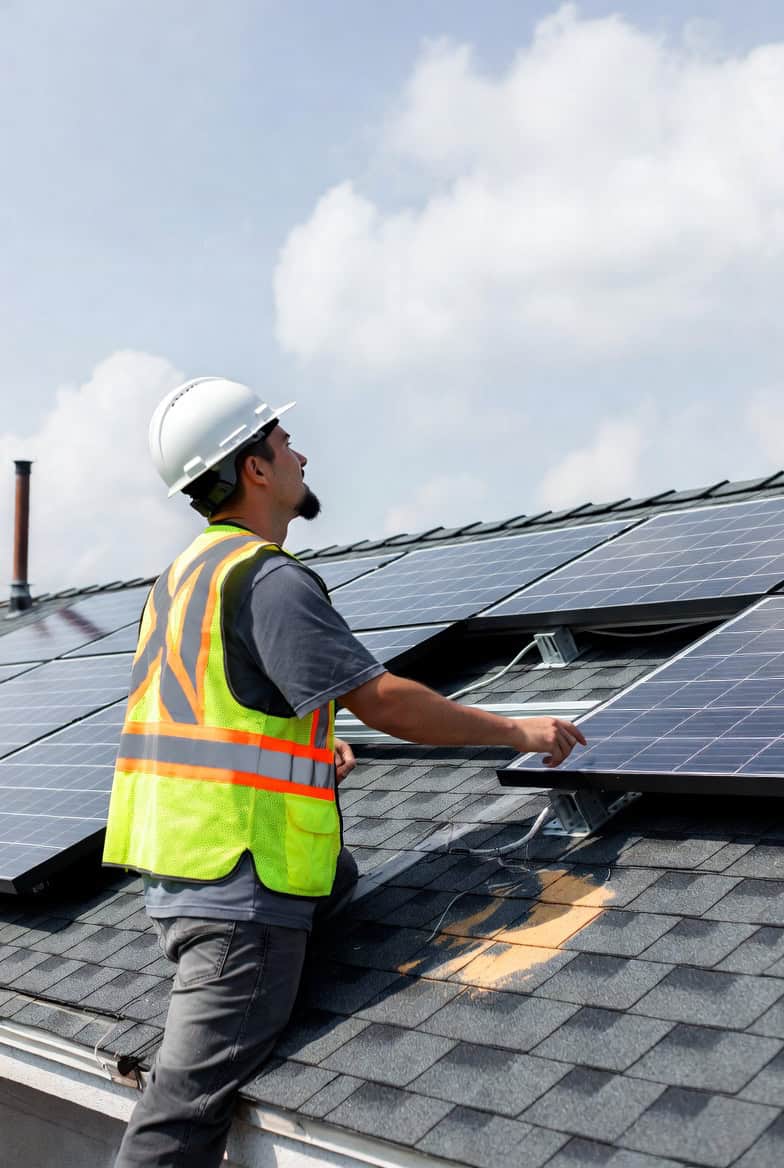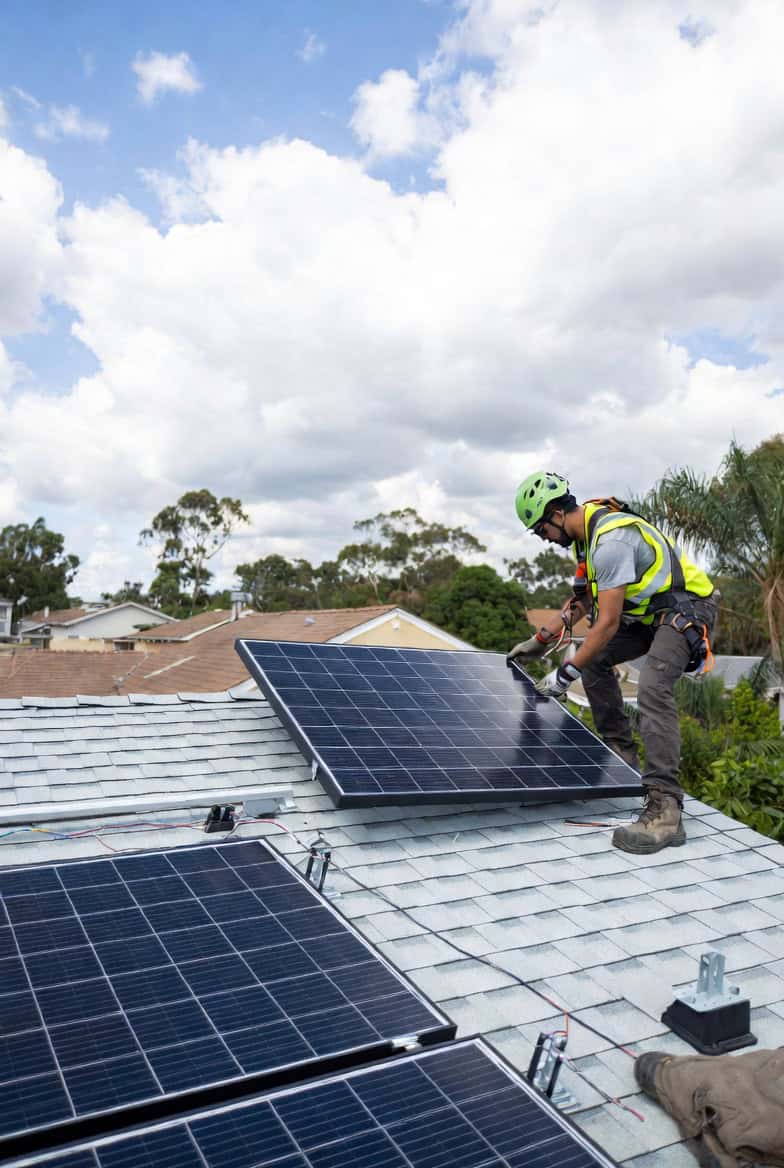
Most solar panels shut down automatically when the power goes out, even on sunny days. Contrary to popular belief, having solar panels on your roof doesn’t mean you have backup power. In fact, standard grid-tied systems—the type installed on most American homes—are specifically designed to shut down within 2 seconds of detecting a grid failure.
Why Standard Solar Panels Don’t Work During Outages
If you have a typical grid-tied solar system, the most common type installed on American homes, your solar panels will shut down within seconds of a power outage.
This isn’t a defect. It’s a safety feature required by federal electrical code.
How Grid-Tied Solar Normally Works
During normal operation, your solar panels generate electricity that flows through an inverter to power your home. Any excess electricity goes back to the utility grid through a process called net metering, which credits your account for the energy you send out.
The utility grid acts like a virtual battery, storing your excess production during the day and supplying power at night when your panels aren’t generating.
How Grid-Tied Solar Shuts Down During Power Outages
Understanding the automatic safety shutdown that protects utility workers
🛡️ Why This Safety Feature Exists
Federal law (IEEE 1547) requires all grid-tied solar systems to shut down during power outages. This isn’t a design flaw—it’s a critical safety feature that protects utility line workers.
When utility workers repair downed power lines, they assume the lines are de-energized (no electricity flowing). If your solar system continued sending electricity into the grid during an outage, it could electrocute workers attempting to restore power. The automatic shutdown prevents this deadly scenario.
The shutdown process is called “anti-islanding protection.” Your inverter constantly monitors the grid’s voltage and frequency. When these parameters fall outside normal ranges (indicating a grid failure), the inverter disconnects within 2 seconds—fast enough to protect workers, but imperceptible to you.
To keep power during outages, you need battery backup or an off-grid system. These systems can safely “island” your home—disconnecting from the grid while continuing to power your house from batteries and solar panels without endangering utility workers on the grid side.
During a blackout, your solar system detects the outage and automatically disconnects. This process, called anti-islanding protection, is mandated by IEEE 1547, a standard electrical code requirement.
The shutdown happens for one important reason: to protect utility workers repairing power lines. If your solar system continued sending electricity into the grid during an outage, it could electrocute workers who assume the lines are dead.
Your system must shut down within 2 seconds of detecting a grid failure according to IEEE 1547 requirements, and won’t restart until grid power is restored.
Three Types of Solar Systems and How They Handle Outages
Not all solar systems shut down during power outages. How your system responds depends on which type you have.
1. Grid-Tied Solar Systems
What it is: Residential solar panels connected directly to the utility grid with no battery storage.
During an outage: Shuts down completely. You’ll have no power, even if the sun is shining.
Cost: $18,000 to $25,000 for a typical residential system.
Best for: Homeowners prioritizing lower costs who live in areas with reliable grid power.
2. Off-Grid Solar Systems
What it is: Solar panels with large battery banks, completely independent from the utility grid.
During an outage: Keeps working because there’s no grid connection to lose. Panels charge batteries during the day, batteries power your home at night.
Cost: $40,000 to $80,000 or more, depending on battery size.
Best for: Remote locations without grid access, or homeowners who want complete energy independence.
Off-grid systems require careful energy management. You’ll need to size your system large enough to handle several cloudy days, and you won’t benefit from net metering credits.
3. Hybrid Solar Systems (Grid-Tied with Battery Backup)
What it is: Solar panels connected to both the grid and battery storage, with a special inverter that can “island” your home during outages.
During an outage: Automatically disconnects from the grid and switches to battery power. Solar panels continue charging batteries during the day.
Cost: $28,000 to $40,000 for solar panels plus battery storage.
Best for: Homeowners who want both net metering benefits and backup power during outages.
When the grid fails, a hybrid system’s inverter detects the outage and disconnects your home from the grid in under one second. Your home becomes its own “island,” powered by your batteries and solar panels until grid power returns.
Solar Battery Backup Functionality
Adding battery storage to your solar system is generally one of the most common ways to keep the power on during outages.
What You Can Expect from a Battery
Battery runtime depends on three factors: battery capacity, your energy usage, and whether solar panels can recharge the battery during the outage.
A typical 13.5 kWh battery (like the Tesla Powerwall 3) can power:
- Essential loads only (refrigerator, lights, WiFi, phone charging): 2 to 4 days
- Whole home without air conditioning: 12 to 24 hours
- Whole home with air conditioning: 6 to 10 hours
If your solar panels can recharge the battery during sunny daylight hours, you can extend these estimates indefinitely — as long as your daily usage doesn’t exceed your solar production.
How Much Are Solar Batteries?
Good question. Battery pack costs have dropped significantly over the years thanks to increased renewable support and a growing trend in solar energy. According to Bloomberg NEF, battery costs averaged $108 per kWh in 2025, down about 50% from 2020 levels.
Fully installed residential battery systems typically cost:
- 10 kWh battery: $10,000 to $13,000
- 13.5 kWh battery: $14,000 to $16,000
- 20 kWh battery: $18,000 to $24,000
Some utilities offer battery incentives that can reduce these costs. For example, Arizona Public Service offers up to $3,750 for battery installations, and Tucson Electric Power pays approximately $720 per year for battery owners who participate in their demand response program.
Whole Home vs. Critical Loads Backup
If you’re adding a battery, you can choose to power your entire home or just essential circuits.
Whole home backup powers everything in your house during an outage. This is simpler to install but requires either a larger battery or careful energy management during extended outages.
Critical loads backup requires installing a sub-panel that connects only essential items like your refrigerator, lights, WiFi router, and medical equipment. This approach extends battery runtime by 2 to 3 times but costs an additional $1,000 to $2,000 for the sub-panel installation.
Alternative Backup Power Options
Solar battery storage isn’t the only way to keep power during outages.
Backup Generators
A natural gas or propane backup generator costs $3,000 to $7,000 installed and can power your entire home for as long as you have fuel.
Generators don’t integrate with solar panels during outages — you’ll use either the generator or your solar system, not both at the same time. They also require regular maintenance, create noise and emissions, and depend on fuel availability.
Portable Solar Generators
Portable battery units from companies like EcoFlow, Bluetti, and Jackery cost $500 to $3,000 and can keep essential items running without professional installation.
These units typically store 1 to 3 kWh of electricity and can charge from portable solar panels. They’re useful for keeping your refrigerator cold, charging phones and laptops, or running a space heater for a few hours, but they can’t power your whole home.
Vehicle-to-Home (V2H) Systems
Some newer electric vehicles, including the Ford F-150 Lightning and certain Rivian models, can power your home using their battery packs.
With 100+ kWh of storage, an EV can power a home for 2 to 7 days during an outage. However, you’ll need to install a bidirectional charger that costs $3,000 to $5,000.
What You Can Expect During Real Outages
Expectations fall short unless you find a model that’s suitable for exactly what you’re looking for during an outage. Let me explain.
Short Afternoon Outage (2 to 4 hours)
Grid-tied solar: No power despite sunny conditions.
Hybrid with 13.5 kWh battery: Seamless transition to battery power. Can run whole home including air conditioning. Solar panels partially recharge battery. Still have 60% or more charge when grid returns.
Extended Winter Outage (24 to 48 hours)
Grid-tied solar: No power for entire duration.
Hybrid with battery: Day one runs normally on battery. Day two requires managing loads carefully as battery depletes and solar production is limited by winter weather and shorter days. May need generator backup or very conservative energy use by day three.
Multi-Day Prevention Shutdown (3 to 7 days)
Hybrid system with critical loads only: Can sustain essential items throughout the outage with daily solar recharging, though careful energy management becomes necessary after day three.
These scenarios assume conservative energy use and some solar production. Running high-draw appliances like electric heat or central air conditioning will significantly reduce battery runtime.
Should You Purchase a Battery? Or Is It Unneccessary?
In 2026, battery backup typically costs $10,000 to $16,000 more than solar panels alone. Whether this makes financial sense depends on your specific situation.
When Battery Backup Makes Sense
Battery backup provides the most value if you:
- Experience 5 or more power outages per year
- Have medical equipment that requires power
- Work from home and lose income during outages
- Face high electricity costs during peak hours (time-of-use rates)
- Live in an area with poor net metering rates
Beyond backup power, batteries can reduce your electricity bills through time-of-use rate arbitrage — storing cheap daytime solar power for expensive evening peak hours. This strategy may save $200 to $600 annually depending on your utility’s rate structure.
When to Skip Battery Backup
Battery backup may not make financial sense if you:
- Rarely experience outages (one or two per year lasting under two hours)
- Live in an area with reliable grid power
- Have a limited budget and need to prioritize solar panels first
- Plan to move within 3 to 5 years
You can always add battery storage later – assuming your model accepts the addon. Battery costs continue declining 5% to 10% per year, and most solar systems can be retrofitted with batteries, though this costs more than installing everything at once.
How to Add A Backup Power to Your Current System
Whether you’re planning a new installation or have existing solar panels, here’s how to add backup capability.
For New Solar Installations
- Assess your needs. Calculate how many power outages you experience annually and how long they typically last.
- Decide what to power. Determine whether you need whole-home backup or just essential loads.
- Get multiple quotes. Request proposals from 3 to 5 solar installers. Ask specifically about hybrid systems with battery backup.
- Size your battery appropriately. For essential loads only, 10 to 13.5 kWh is typical. For whole home backup, consider 13.5 to 20 kWh.
- Verify islanding capability. Confirm that the system can automatically disconnect from the grid and continue operating during outages.
For Existing Solar Systems
Most existing solar systems can be retrofitted with battery backup, though the process and cost vary by system type.
Micro-inverter systems (like Enphase) can add Enphase IQ batteries relatively easily. Cost: $7,000 to $15,000 installed.
String inverter systems may require inverter upgrades to accommodate batteries. Cost: $12,000 to $20,000 installed.
Older systems might need complete inverter replacement. It’s always worth evaluating whether the retrofit cost justifies the backup capability you’ll gain.
Important Questions You Should Ask An Installer
Before committing to a battery backup system, ask:
- Does this system automatically disconnect from the grid during outages?
- What’s the switchover time from grid to battery power?
- Can solar panels charge the batteries during an outage?
- How long will the battery power my specific home and usage patterns?
- Can I add more battery capacity later if needed?
- What happens if the battery depletes during a multi-day outage?
Frequently Asked Questions
Will my solar panels work during a power outage?
Not unless you have battery backup or an off-grid system. Standard grid-tied solar panels automatically shut down during outages due to safety requirements that protect utility workers repairing power lines.
Why do solar panels shut off when the power goes out?
Federal electrical code requires solar systems to shut down during grid outages to prevent electricity from flowing into power lines that utility workers assume are dead. This safety feature, called anti-islanding protection, activates within 10 seconds of detecting an outage.
Can I add battery backup to my existing solar system?
Yes, though cost and complexity vary by system type. Micro-inverter systems are easiest to retrofit with batteries. String inverter systems may require inverter upgrades. Expect to pay $10,000 to $25,000 for a battery retrofit depending on capacity and installation requirements.
How long will a solar battery power my house during an outage?
It depends on battery size and usage. A 13.5 kWh battery typically powers essential loads for 2 to 4 days, a whole home without air conditioning for 12 to 24 hours, or a whole home with air conditioning for 6 to 10 hours. With solar recharging during the day, you can extend these timeframes if your usage is less than your daily solar production.
What’s the difference between grid-tied and off-grid solar?
Grid-tied solar connects to the utility grid and shuts down during outages unless it has battery backup. It costs less ($18,000 to $25,000) and benefits from net metering. Off-grid solar operates independently with large battery banks, works during any outage, but costs significantly more ($40,000 to $80,000+) and requires careful energy management.
Do I need special equipment for battery backup?
Yes. You need either a hybrid inverter that can handle solar, battery, and grid connections, or an AC-coupled battery system with a compatible inverter. Standard grid-tied inverters don’t support battery backup or islanding capability.
Can solar panels charge batteries during a power outage?
Yes, but only with the right equipment. Grid-tied systems without batteries shut down completely during outages. Hybrid systems with battery backup automatically disconnect from the grid and continue operating, allowing solar panels to charge batteries during the day while powering your home.
Is solar with battery backup worth it without the federal tax credit?
The federal solar tax credit expired on December 31, 2025, making battery backup $10,000 to $16,000 more expensive than solar alone. It makes financial sense if you experience frequent outages, have high time-of-use electricity rates, need medical equipment powered, or live in areas with poor net metering rates. For infrequent outages, a portable generator may be more cost-effective.
Sources: IEEE 1547 standards, Bloomberg NEF battery cost analysis, Tesla Powerwall specifications, Arizona Public Service battery incentive programs, Tucson Electric Power Energy Storage Rewards, U.S. Department of Energy outage statistics