

Last updated: March 24, 2026
Affiliate Disclosure: Exspenditure earns a commission if you purchase through links on this page. This comes at no extra cost to you. We are not employed by Bluetti. Editorial opinions are our own and based on verified manufacturer specifications and published third-party review data. Prices change frequently — confirm current pricing on Bluetti’s website before buying.
Our Verdict
The Bluetti Elite 300 earns its place as the benchmark 3kWh portable power station for 2026. It packs more battery capacity into a smaller chassis than anything else at this price point, charges to 80% in 70 minutes combined, and ships with a TT-30R RV port. Check current pricing at Bluetti’s website — launch promotions are active at the time of writing.
Buy if you:
- Need 3kWh in a package that fits an RV compartment
- Want a silent, fuel-free generator replacement
- Run a NAS or need <10ms UPS protection
- Plan to pair with solar panels
- Live in a high-rate state where solar ROI is strong
Look elsewhere if you:
- Need expandable capacity beyond 3kWh
- Require 240V output
- Want whole-home transfer switch integration
- Need to carry it frequently (58 lbs is real weight)

Full Specifications
All figures are US version specs, verified against Bluetti’s official product page and manufacturer press materials.
| Specification | Bluetti Elite 300 |
|---|---|
| Battery capacity | 3,014.4 Wh (LiFePO4) |
| Battery chemistry | Automotive-grade LiFePO4 |
| Battery cycle life | 6,000+ cycles to 80% capacity |
| Continuous AC output | 2,400W |
| Power Lifting Mode (surge) | 4,800W |
| UPS switchover | <10ms |
| AC charging speed | 1,800W max, 15A, 120V |
| AC bypass output (UPS mode) | 1,800W max, 120V |
| Solar input | 1,200W max (12V–60V, 22A max) |
| AC + solar combined charge | 2,400W (0–80% in 70 min) |
| AC-only charge time | 0–80% in 78 min, 0–100% in 1.6 hrs |
| Alternator charging (Charger 2) | Up to 1,200W |
| AC outlets | 4x NEMA 5-20R (120V) |
| RV outlet | 1x NEMA TT-30R (dedicated) |
| USB-C ports | 2x (140W + 100W) |
| USB-A ports | 2x (15W each, 30W total) |
| 12V car outlet | 1x (120W) |
| 12V DC output | 1x 12V/30A (high-current) |
| IP rating | IP20 |
| Weight | 26.3 kg / 58 lbs |
| Dimensions | 366 × 305 × 297.5 mm (14.4 × 12 × 11.7 in) |
| App connectivity | Wi-Fi + Bluetooth (Bluetti app) |
| Warranty | 5 years |
What Separates the Elite 300 From Other Models
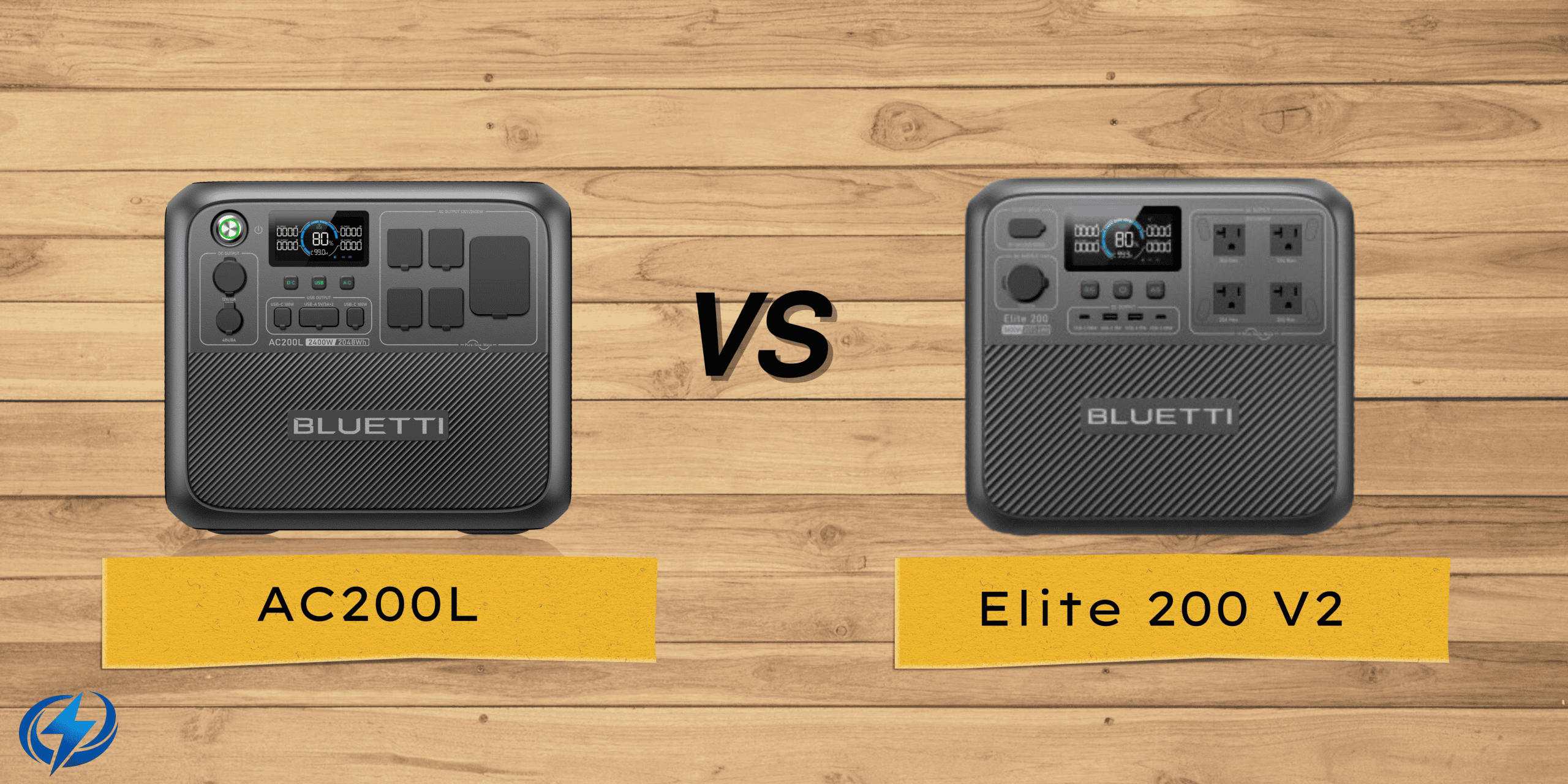
The 3kWh portable power station category has a size problem. Most units in this class are large, heavy, and built like the floor-standing home battery units they’re trying to replace. Bluetti’s claim with the Elite 300 is that it’s certified by Frost & Sullivan as the smallest 3kWh portable power station by volume available globally as of January 2026 — and its dimensions back this up: it fits in a chassis closer to a standard 2kWh unit.
That matters for three specific reasons.
First, RV storage compartments have hard dimensional limits — a unit that physically fits where a 2kWh unit would fit but delivers 3kWh changes the calculus entirely.
Second, apartment and small-home use cases benefit from a unit that can go in a closet rather than taking up floor space.
Third, the weight at 58 lbs is on the edge of what one person can carry, but it’s manageable in a way that 80-pound units aren’t.
The other differentiator is the TT-30R RV port. Most portable power stations at any price point don’t include one. You either use an adapter or you’re running everything through standard AC outlets. The Elite 300 ships with a dedicated TT-30R, which means plugging directly into a travel trailer’s shore power inlet without any adapter overhead. Alongside that is a 12V/30A high-current DC output — not the standard 12V/10A car socket that most units include, but a genuinely high-current DC port for running 12V RV appliances directly, skipping the efficiency loss of AC-to-DC conversion.
The Battery Chemistry Tier That Matters
Not all LiFePO4 cells are equal. Bluetti uses premium LiFePO4 cells in the Elite 300 — rated at 6,000+ cycles to 80% capacity, the same tier used in the Elite 100 V2, Elite 200 V2, and Apex 300. At one cycle per day, 6,000 cycles is over 16 years of daily use before capacity drops to 80%. In practice most users won’t cycle daily, which pushes the realistic lifespan further.
The implication: this unit is built to be used regularly, not stored in a garage for emergencies. Campers, van dwellers, and homeowners who want a daily-use backup paired with solar will get the full value of the higher cycle rating.
Runtime Estimates
These figures use Bluetti’s published runtime data and standard inverter efficiency assumptions (~85%). Actual runtime varies with temperature, load fluctuation, and battery age.
| Device / Appliance | Estimated Draw | Runtime at 3,014Wh |
|---|---|---|
| Full-size refrigerator | ~60W avg | ~50 hours |
| Wi-Fi router | ~10W | ~290 hours |
| LED TV (55″) | ~80W | ~35 hours |
| CPAP machine (no heat) | ~30W | ~90 hours |
| Laptop (charging) | ~65W | ~44 hours |
| Space heater (low) | ~750W | ~3.5 hours |
| Microwave (mid power) | ~900W | ~3 hours |
| Electric kettle | ~1,500W | ~15 boils |
| Smartphone (charging) | ~18W | ~120 charges |
| Power drill (intermittent) | ~500W avg | ~5 hours |
On Power Lifting Mode: The 4,800W Power Lifting Mode extends the Elite 300’s usable range to resistive-load appliances — hair dryers, electric kettles, ovens, induction cooktops — that exceed the standard 2,400W continuous rating. It works by reducing the appliance’s effective draw through software management. Use it for heating elements, not for motors, compressors, or precision medical equipment.
Charging: The 70-Minute Claim Explained
Bluetti quotes 70 minutes to 80% using AC and solar simultaneously at their combined 2,400W maximum. That requires both a wall outlet providing 1,800W and a solar array delivering the remaining 600W — peak solar conditions, optimal angle, and a clean panel surface. In actual conditions with a single 200W panel and a wall outlet, you’ll typically see closer to 90–100 minutes to 80%, which is still excellent for a 3kWh unit.
Wall-only charging at 1,800W gets to 80% in 78 minutes and fully charges in 1.6 hours. That’s the number to plan around for home and RV use.
Solar Charging
The 1,200W solar input accepts panels from 12V–60V at up to 22A. A 400W solar setup (two 200W panels) will fully charge the Elite 300 in approximately 5–7 hours of good sunlight. A 600W setup gets closer to 4 hours. The MPPT charge controller handles mixed panel configurations and partial shade conditions reasonably well.
The Charger 2 Integration
The Elite 300 pairs specifically with Bluetti’s Charger 2 vehicle hub, which draws up to 800W from your vehicle’s alternator and an additional 400W from solar simultaneously. That 1,200W combined alternator+solar input makes vehicle-based charging approximately 13x faster than a standard 12V cigarette lighter socket. For van lifers driving between locations, this combination means meaningful charge recovery during transit.
How It Compares to Other Models
Direct competitors in the 3kWh portable power station category. Check current pricing at each brand’s website before purchasing.
| Spec | Bluetti Elite 300 | EcoFlow Delta Pro 3 | Jackery HomePower 3000 |
|---|---|---|---|
| Capacity | 3,014Wh | 4,096Wh | 3,024Wh |
| Continuous output | 2,400W | 4,000W | 3,600W |
| Surge (peak) | 4,800W | 8,000W | 7,200W |
| Battery cycles | 6,000+ | 4,000 | 2,000 |
| UPS switchover | <10ms | <30ms | <30ms |
| AC charge speed | 1,800W | 3,000W | 2,400W |
| Solar input | 1,200W | 2,600W | 1,400W |
| RV (TT-30R) port | Yes | No | No |
| Weight | 58 lbs | 110 lbs | 63 lbs |
| Expandable | No | Yes (to 36.9kWh) | No |
| Warranty | 5 years | 5 years | 5 years |
The honest read on this comparison: The EcoFlow Delta Pro 3 is a significantly more powerful unit with expandability the Elite 300 can’t match. If you need 240V, 4,000W+ continuous output, or the ability to grow capacity over time, it’s the stronger choice. The Elite 300 wins on portability, cycle life, UPS speed, and RV-specific port layout. They serve different primary use cases.
Who Should Buy the Elite 300
Home backup during outages
3,014Wh covers the essential-device scenario — fridge, Wi-Fi router, phone charging, LED lighting, and a CPAP machine — for 24–48 hours without recharging. The <10ms UPS switchover is fast enough to protect a NAS server, desktop workstation, or home security system from even a brief grid interruption. In bypass mode the unit passes grid power through at up to 1,800W while keeping the battery charged — switching to battery instantly if the grid drops. For people in states with aging grid infrastructure or frequent storm outages, this is the unit that bridges most outages without requiring generator fuel storage or ventilation.
RV and travel trailer power
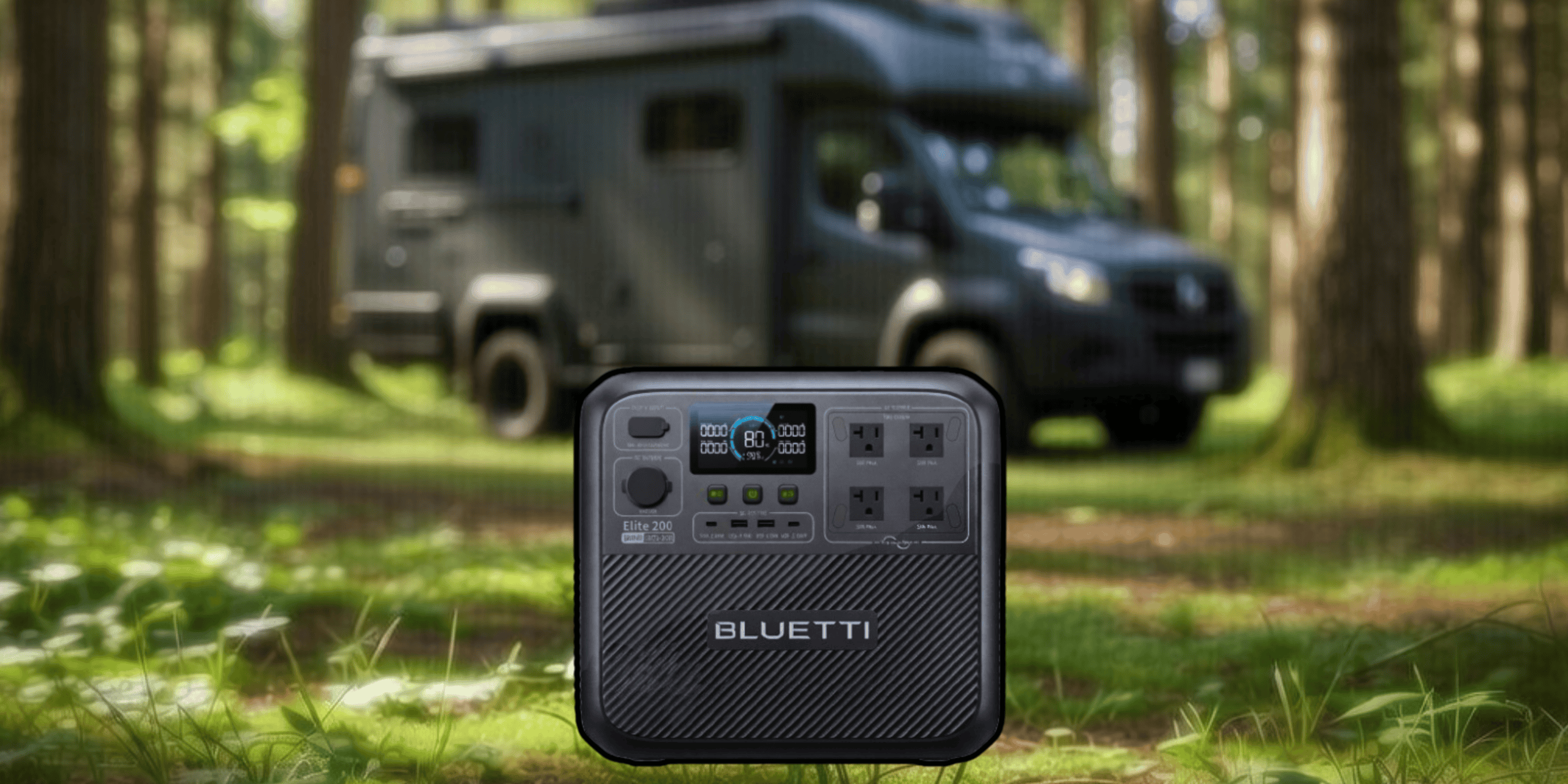
The dedicated TT-30R port is the feature that puts this unit ahead of most competitors for RV use specifically. Shore power hookups at campgrounds use a TT-30 connector — plugging the Elite 300 directly into the trailer’s shore power inlet means all RV appliances run from the battery without adapter chains or power loss. The 12V/30A DC port handles 12V RV appliances directly, and the Charger 2 integration means you’re recovering charge from the alternator while driving between sites.
Off-grid and van life
The 58-pound weight is at the upper end of what’s practical for frequent solo carrying, but the compact dimensions mean it fits in most van builds where a larger unit won’t. The 1,200W solar input is adequate for a 400–600W rooftop setup — common in van configurations. Daily cycling on premium LiFePO4 cells means the battery is designed for this use pattern.
Pairing with residential solar
If you’re in a state with high electricity rates — New Jersey, Massachusetts, California — a portable 3kWh battery paired with a small solar array provides meaningful bill offset alongside energy independence during outages. The Elite 300 isn’t a whole-home battery system, but it covers the essential load profile for most households during peak hours when grid rates are highest.
Frequently Asked Questions
Is the Bluetti Elite 300 expandable with extra batteries?
No. The Elite 300 is a standalone 3,014.4Wh unit with no expansion battery compatibility. If expandable capacity is a priority — for whole-home backup or extended off-grid use — the Bluetti Apex 300 or EcoFlow Delta Pro 3 are the appropriate alternatives. The Elite 300 is optimized for compact, portable 3kWh delivery rather than scalable home energy storage.
Does the Elite 300 support 240V output?
No. The US version delivers 120V AC output across its four standard outlets and TT-30R RV port. It does not support 240V appliances such as electric dryers, central air conditioning units, or EV Level 2 charging. For 240V capability in Bluetti’s lineup, the Apex 300 is the relevant model.
How long does the Elite 300 last before capacity degrades?
Bluetti rates the Elite 300 at 6,000+ cycles to 80% capacity using premium LiFePO4 cells. At one full cycle per day, that is over 16 years before the battery reaches 80% of its original 3,014Wh. At more typical usage patterns — three to five cycles per week — the battery will retain at least 80% capacity well beyond a decade of regular use. The 5-year warranty covers capacity drops below 80% within the warranty period.
Can the Elite 300 power an RV air conditioner?
A standard 13,500 BTU RV rooftop AC unit draws approximately 1,500–1,800W running and requires 2,500–3,500W to start. The Elite 300’s 2,400W continuous output and 4,800W Power Lifting Mode can run most RV ACs at operating load, but starting current is the variable. Smaller 5,000–8,000 BTU units start reliably. Larger units may require the Power Lifting Mode to handle startup surge. Always check your specific AC unit’s startup wattage before relying on this for sustained AC use.
How does the Elite 300 compare to a gas generator for home backup?
The Elite 300 produces zero exhaust, operates at under 30dB at standard loads, requires no fuel storage, and can be used indoors safely. The trade-off is finite stored capacity — a gas generator can run indefinitely with fuel resupply, while the Elite 300 covers approximately 24–48 hours of essential-device load before needing a recharge. For outages under 12 hours, the Elite 300 is the straightforwardly better option. For multi-day outages without solar recharging, a gas generator or a larger home battery system is the more practical solution.
Disclaimer:
Specifications are based on Bluetti’s official US product page and manufacturer press materials as of March 2026. Prices fluctuate — verify current pricing at Bluetti’s website before purchasing. Runtime estimates are calculated from published capacity figures using standard inverter efficiency assumptions; actual runtime varies with load, temperature, and battery condition. Nothing in this article constitutes financial or purchasing advice. Exspenditure is not responsible for changes in product specifications, availability, or pricing after publication.